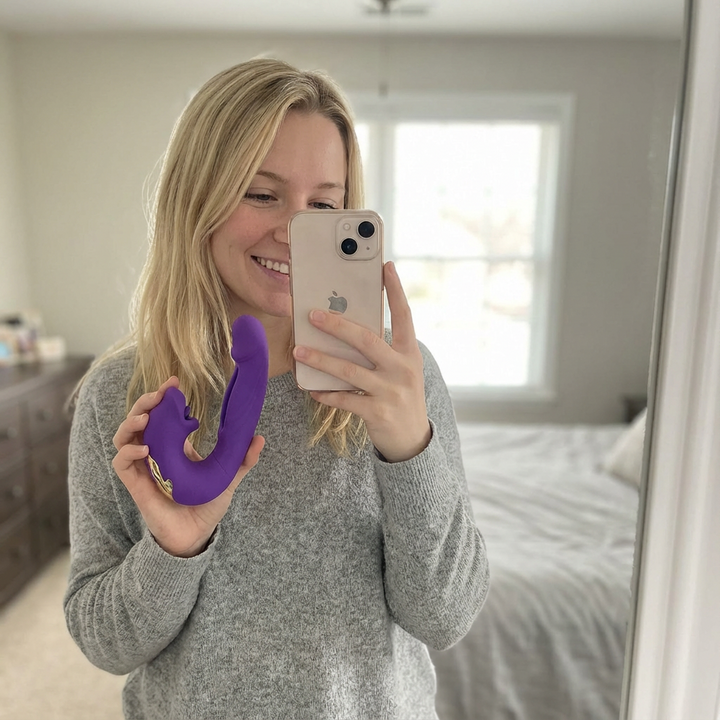
I set up Feelza because the system kept telling me I was the problem. I wasn’t.
Three months after the birth of my son, my physiotherapist handed me a leaflet. A QR code, a device, a twelve-week programme. She was friendly, thorough and absolutely spot on in everything she said. I stuck to the plan for exactly nineteen days. Then life got in the way – a sick toddler, a deadline, a bad night’s sleep – and the device ended up in the bathroom cupboard next to the vitamins, which I’d also stopped taking. I thought long and hard about what that said about me. My discipline, my priorities. But when I started talking to other women – friends, strangers on forums, my own mum – I heard the same story over and over again. The device. The app. The optimism. The drawer. That wasn’t a coincidence. It was a design failure. Nobody had built anything that really fits into the real life of a real woman. They’d just built something that works in a clinical trial and hoped for the best.
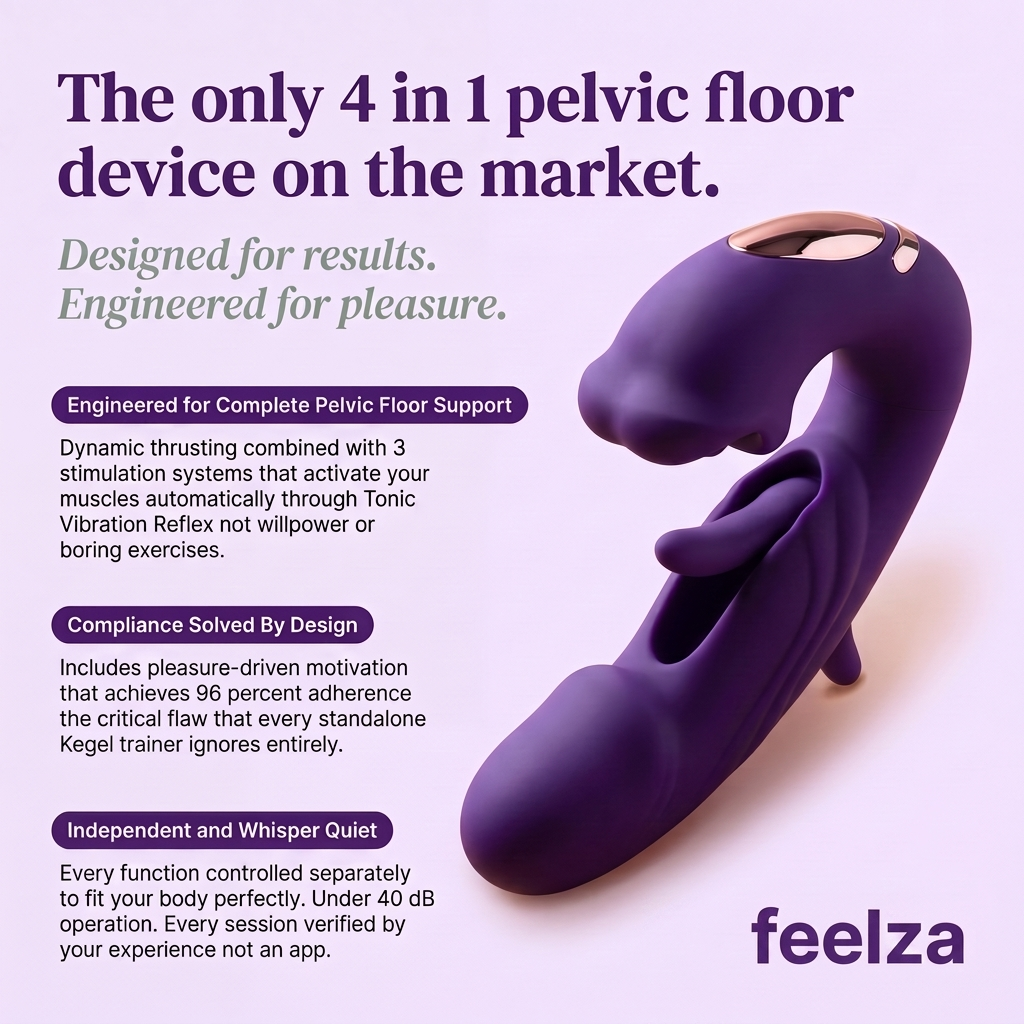
Feelza exists because of this gap. Every decision we’ve made – the virtually silent motor, the three-minute beginner’s mode, the way the app doesn’t penalise you if you skip a day – stemmed from a single question: what would really make someone stick with it? Not under ideal conditions. On a Tuesday at 10 pm, when you’re exhausted and have thirty seconds to spare. That’s the woman we built this for. That was me. If any of this sounds familiar, you’re exactly the reason why Feelza exists.